



Gemepe Castle, Belgium
Also known as Hagimont Castle, it is located in the town of Hagimont in the province of Luxembourg in the Walloon region of Belgium, and is now part of the city of Marsh En Famenne. Built in the 13th century, it was originally a 23 meter high square main building used for residential and defensive purposes, and was the residence of the Jiemei Pei family. In the 17th century, the Ans family expanded the castle by adding three wings, forming the quadrilateral building that is now visible. Once abandoned in the 20th century, it was later purchased and fully renovated, and now it is a modern conference center. Surrounded by typical hills and beautiful scenery of the Ardennes region in Belgium.

Milwalt Castle, Belgium
It is a historic castle located in the town of Milwalt in Saint Hubert, Luxembourg Province, Belgium. It is located on rocks above the Lom Valley, enjoying spectacular natural scenery. The origin of the castle can be traced back to the 11th century, when it was part of the Duchy of Lorraine and used as a military fortress. Witnessing the turbulent history of the Middle Ages, the lords of Milwalt had multiple intense conflicts with surrounding feudal lords such as the lords of Buon and Osimont during that era. These conflicts are often over the struggle for territory and power, reflecting the complex power structure and territorial disputes of feudal society at that time.

Frukur Castle, Belgium
Located in the southern part of the province of Liege in the Walloon region of Belgium, between the villages of Stumont and Lagerlaise, overlooking the Anblaf River Valley. Built in 1912, it was completed by Charles Albert de Haren in 1919, who was the mayor of Stormont. The castle has distinct medieval features, including castle towers and watchtowers. The history can be traced back to the Middle Ages, when there was another castle here to guard the valley. Around 1600, it was replaced by another castle called Salm Castle and became a symbol of the glory of Stormont. However, the origin of the glory of Frukur, named after its original inhabitants, remains a mystery

St. Peter and Paul's Church
It is a church with a long history, built around 1120 and adopting the Romanesque style. Not only religious buildings, but also the first part of the three defense works. In 1320, the church underwent an early Gothic expansion. In the 15th century, in order to strengthen defense, a defensive wall was built around the cemetery surrounding the church. In 1987, murals dating back to around 1320 were discovered and restored, depicting Saint Christopher. This church witnesses the evolution of architectural styles and historical changes in medieval Europe, and is an important heritage for studying medieval architecture and art.

St. Jacob's Church in Austria
It is a Roman Catholic church located in the southern part of the village of Regensburg in the municipality of Staldof, Austria. This church is named after Saint James and is a Baroque style building that was converted from a granary in the late 17th century. The tower is one of its prominent features, decorated with an onion shaped dome at the top, adding an oriental touch to the church and making it stand out among the surrounding buildings. In 1770, the church established a diocese, and in 1783, it officially became an independent diocese, marking a further recognition and elevation of the importance of the church in religious and social life.
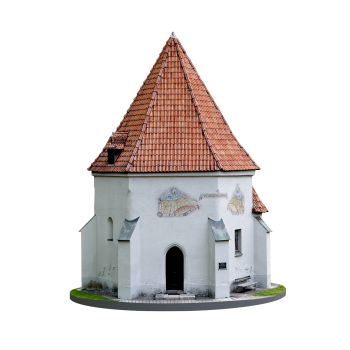
Maria Magdalena Chapel
It is a hexagonal central building built in the first half of the 13th century. It has a tent style roof and a circular rear hall. This building was once used as a bone storage hall and is now used as a funeral home. Known for its unique hexagonal design and tent roof, these features make it particularly distinctive in medieval architecture. The circular rear hall adds beauty to the building and makes it more harmonious structurally. As a place for storing remains, it has witnessed the end of many lives and commemorations. Now transformed into a funeral home, continuing to provide a space for people to mourn and bid farewell.

St. Michael's Fortified Church Gothic Crematorium
Located within the reinforced church of St. Michael's, the attached crematorium is a place for storing the remains of the deceased, in order to address the limited space of St. Michael's cemetery. This crematorium was built after 1395. It is a tall and narrow building with five spires on the east side, sturdy stepped buttresses, double layered pointed arch windows adorned with clover flowers, and pointed arch windows adorned with clover flowers. The crematorium is located between the rear hall of the reinforced church and the reinforced tower in the southeast corner. The interior is a single span structure with a ribbed dome at the top, supported on a Holy Grail shaped pedestal.

Poland's historic wooden church
Located in the Carpathian region of Poland, there is a historic wooden church. Built in 1759, it was originally a courtyard chapel of the Kuchkovsky family, named after the Gospel of St. John. In 1778, it became a branch church, and from 1788 onwards, it became the parish church of the newly established Diocese of Saint Anne. Until 2004, this building was used as a parish church until a new church was built and put into use. On April 7, 2004, it was included in the memorial registry.

Lalne Castle, Belgium
It is a castle with a moat located in Larne, East Flanders, Belgium, near its capital city of Ghent. The Lalne Castle is located at an altitude of 3 meters and was built in the 11th or 12th century to guard the sea passage leading to Ghent. A comprehensive renovation was carried out in the 17th century. This castle not only witnesses the history of Belgium, but also has become an important tourist attraction and cultural heritage site in the area with its unique architectural style and rich cultural heritage.

Carnarvon Castle in Wales
It is a medieval fortress located in Gwyneth County, northwest Wales. The first defensive structure on this site was a mound and fenced castle built in the late 11th century, which was replaced by the current stone structure by King Edward I of England in 1283. The castles and towns established by Edward I became the administrative center of North Wales, so the defensive works were built on a grand scale. The design of the castle is intentionally linked to the Roman history of Caernarfon - nearby is the Roman fortress of Segantin, and the walls of the castle evoke the city walls of Constantinople.

Redby Castle, England
It is a medieval castle located near Staindrup in County Durham, England, covering an area of 200 acres (approximately 810000 square meters) in a deer park. Built by John Neville, the third Baron Neville, around 1367 to 1390. Cecily Neville, the mother of Edward IV and Richard III, was born here. In Charles Neville, the sixth Earl of Westmoreland, the castle was taken over by the royal family after the Northern Revolt led by him in support of Queen Mary of Scotland failed in 1569.

Pembroke Castle, Wales
It is a medieval castle located in the center of Pembrokeshire, Wales, and also the former family residence of Pembrokeshire. Since 1951, it has been listed as a first-class protected building and underwent extensive restoration in the early 20th century. In 1093, Arnolf de Montgomery built his first castle on the cape next to the Pembroke River during the Normandy invasion of Wales. A century later, Richard I gifted the castle to William Marshall, who became one of the most powerful figures in 12th century England. Marshall rebuilt Pembroke Castle with stones, forming most of the existing structures today.
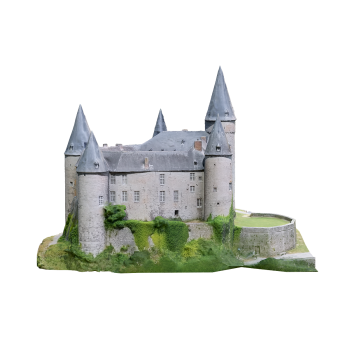
Villeneuve Castle, Belgium
Located in the Walloon region outside the village of Seles in the province of Namur, Belgium, it sits on a rocky platform. This castle is classified as a major heritage site in the Walloon region. Originating from 670 to 714 AD, military leader Pepin Hestar ruled the region at that time. Not only is it an important representative of 15th century military architecture, but it is also known for its magnificent towers and exquisite wood carvings. Owned and maintained by the same family for over 800 years, it is considered an outstanding heritage of the Walloon region. Not only is it a historical relic, but it is also a historical heritage site that the public can visit. Its interior decoration and furniture have been carefully restored, restoring its former glory

Circular houses from the Iron Age
It is a typical architecture of Iron Age Europe, mainly distributed between 1200 BC and 400 AD. This type of house is usually built of wood, with a circular plan and a conical roof covered with thatch. The walls are made up of wooden columns that are deeply buried underground to provide a stable foundation. There is a gap between the walls and the roof to allow smoke to escape while also providing ventilation for the house. Due to the lack of windows in the Iron Age, doors were the only entrance and were usually equipped with thresholds to prevent animals from entering. These buildings provide valuable clues for us to understand the lifestyle of ancient Europeans.

Japanese style residence
Japanese style residences, also known as Japanese style residences, are a traditional form of living in Japan known for their simplicity, naturalness, and harmony. This residential style is deeply influenced by Japanese culture and Zen philosophy, emphasizing harmonious coexistence with nature, as well as the multifunctionality and flexibility of the space. Typical features include the use of natural materials such as wood, bamboo, and paper, as well as the adoption of traditional Japanese building techniques. Houses are usually made of wooden structures, with roofs covered in tiles or mats, and exterior walls painted in natural tones, blending seamlessly with the surrounding environment. This not only reflects traditional Japanese aesthetics, but also embodies a simple and environmentally friendly way of life.

Densu ş Stone Church in Hunedoara, Romania
The Densu ş Stone Church, located in Densu ş Village, Hunedoara County, Romania, is a historic religious building and is considered one of the oldest stone churches in Romania. The history of the church can be traced back to the 14th century, and some historians even believe that it may be even older. The walls of the church are constructed from limestone blocks taken from nearby ancient Roman cities. Not only is it a religious building, but it is also a symbol of Romanian culture and history. Witnessed the rich history from the Dacian era until today. Due to its unique historical value and architectural features, it has attracted numerous domestic and foreign tourists to visit and pilgrimage.

San Carapet Church in Amini
A medieval monastery complex located in Armenia, also known as Camille Monastery or Zolakiu Monastery, has significant architectural and historical value. The St. Karapette Church is a highlight of the architectural complex, built in 1205 and belonging to the vaulted church type. On the east side of the church, there is a semi-circular main altar, and on both sides are arched vestibules with a right angle perspective. The church has two entrances, located on the west and north sides respectively. All facades are decorated with 'Armenian Hymn'. The dome of the church was destroyed in the 1939 earthquake and was repaired in 1980.

Kensal Green Non-Anglican Chapel, London
A historic chapel within Kensal Green Cemetery in London, built in 1834 and designed by John Griffith in the Greek Revival style. This chapel especially served non-Anglicans and was of great significance in the religious environment of Britain at the time. Not only was it one of the first permanent structures within Kensal Green Cemetery, but its design had a profound influence on the later cemetery architecture and monument style. Major restoration work was completed in 1997. At the same time, the chapel and its basement are also open to the public, becoming an important place to learn about the design of the 19th century cemetery and the history of religion.

Paldov St. Rox Chapel
The St. Rox Chapel located in Pardov is a Baroque style chapel built in the first half of the 18th century. The establishment of this chapel is related to the last large-scale plague outbreak in Europe at that time, hence the name 'Plague Chapel'. The facade is decorated with niches, in which statues of saints are placed, reflecting people's fear of epidemics and their desire for divine protection at that time. Not only is it a religious site, but it is also a symbol of the culture and history of the Pardov region. It witnessed a difficult period in human history and is also evidence of the spread and development of Baroque art in Central Europe.

Baltimore Royal Mountain Train Station, USA
Located in Baltimore, Maryland, USA, it is a historic railway station. Originally built in 1896, it served as a passenger train station for the Baltimore and Ohio Railroad Company. As an official historical landmark, it was listed in the National Register of Historic Places in 1976. Not only has it witnessed the development of railway transportation in the United States, but it is also an important part of Baltimore's urban history. The architectural style and engineering design reflect the architectural features of the late 19th and early 20th centuries, and their historical value and architectural aesthetics have been appreciated and protected by people.
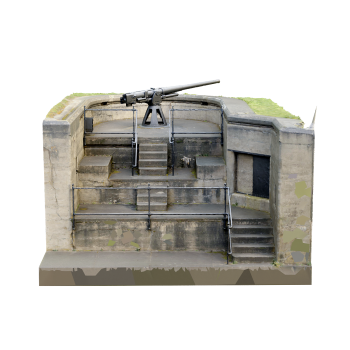
Washington Coastal Battery, United States
It is a historic coastal battery located in Fort Flagler State Historical Park in Jefferson County, Washington, USA. Built between 1903 and 1905, in memory of Thomas A. of the United States Second Infantry Division who died in the 1898 Battle of El Canes, Cuba Lieutenant Wansboro. It consists of two 3-inch M1903 guns and corresponding gun mounts, which use M1903 base type gun mounts to provide some protection for the gunner during loading. Now open to the public, showcasing the military defense facilities of that era.

Vologda Bell Tower, Russia
It is an important historical landmark in the city of Vologda, Russia, located next to Sofia Cathedral. Standing 78.5 meters tall, it is one of the tallest buildings in the city. Built between 1568-1570, together with Sofia Cathedral, it forms the oldest architectural complex on the Vologda Kremlin Square and is a symbol of the city's history and culture. The design is simple and rustic, decorated with a golden circular onion top, reflecting the characteristics of traditional Russian architecture. The bell tower preserves a large copper bell from the 17th century, which is still in use today. Its chimes echo over the city, becoming a unique scenic spot in Vologda.

SpisskyHrhov Castle, Slovakia
A historic castle located in the Levo č a region of Slovakia, situated near the village of SpisskyHrhov. Originally built during the Renaissance period in 1596, it was later renovated into Baroque style in the mid-18th century, and in the early 19th century, its facade was designed in Classical style. The castle is a two-story building with a rectangular plan and a three section block layout. In the center of the front, there is a three pointed gable consisting of a lower level pilaster and an upper level colonnade. It was once the property of the Mariassy family and underwent several restorations in the 20th century.

Watford Clock Tower, Ireland
It is an iconic building in Watford, Ireland, built in 1861 and designed in Victorian Gothic style. Three years later, a clock device was added. Not only renowned for its unique architectural style, but also valued for its historical significance. Initially, the construction of the clock tower was to provide facilities for horses to drink water, hence it was also known as the "Fountain Clock Tower". Over time, it has become a part of Watford's historic center and an important landmark for visitors to learn about the city's history. The clock tower is located in the Watford waterfront area, and despite the busy traffic and tourists surrounding it, it still maintains a classical charm.

Popular Models
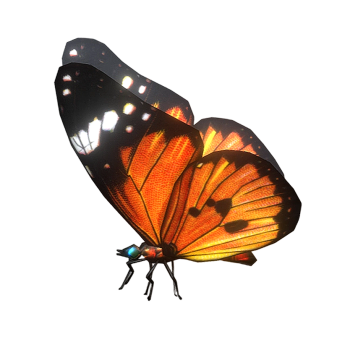
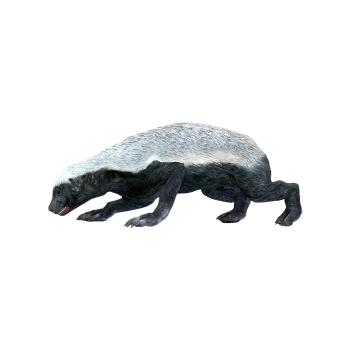
Honey Badger (3D animated model)
196 View

Guinea fowl (3D animated model)
165 View
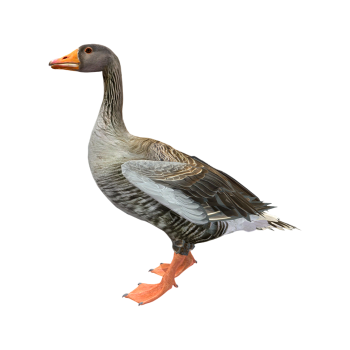
Wild Goose (3D animated model)
187 View
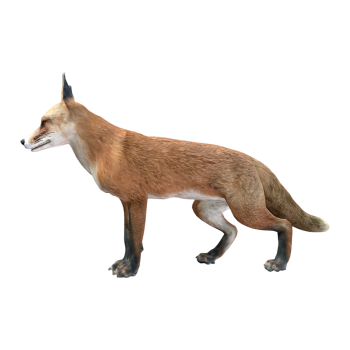
Red Fox (3D animated model)
155 View
Random Model


Golden peach blossom
1231 View

Steep mountains with natural terrain
1365 View

White tea plum specimen
887 View

AlfaRomeo Stradale supercar
954 View

Sailfish 3D model with animation glb
1172 View
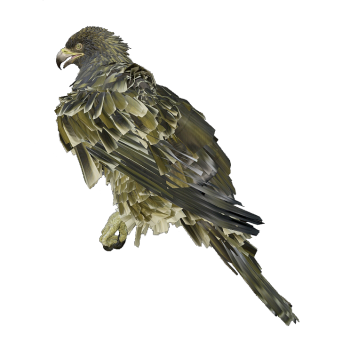
Golden Eagle 3D Model Animation
925 View